COP17: Making Women’s Contributions to Biodiversity Visible
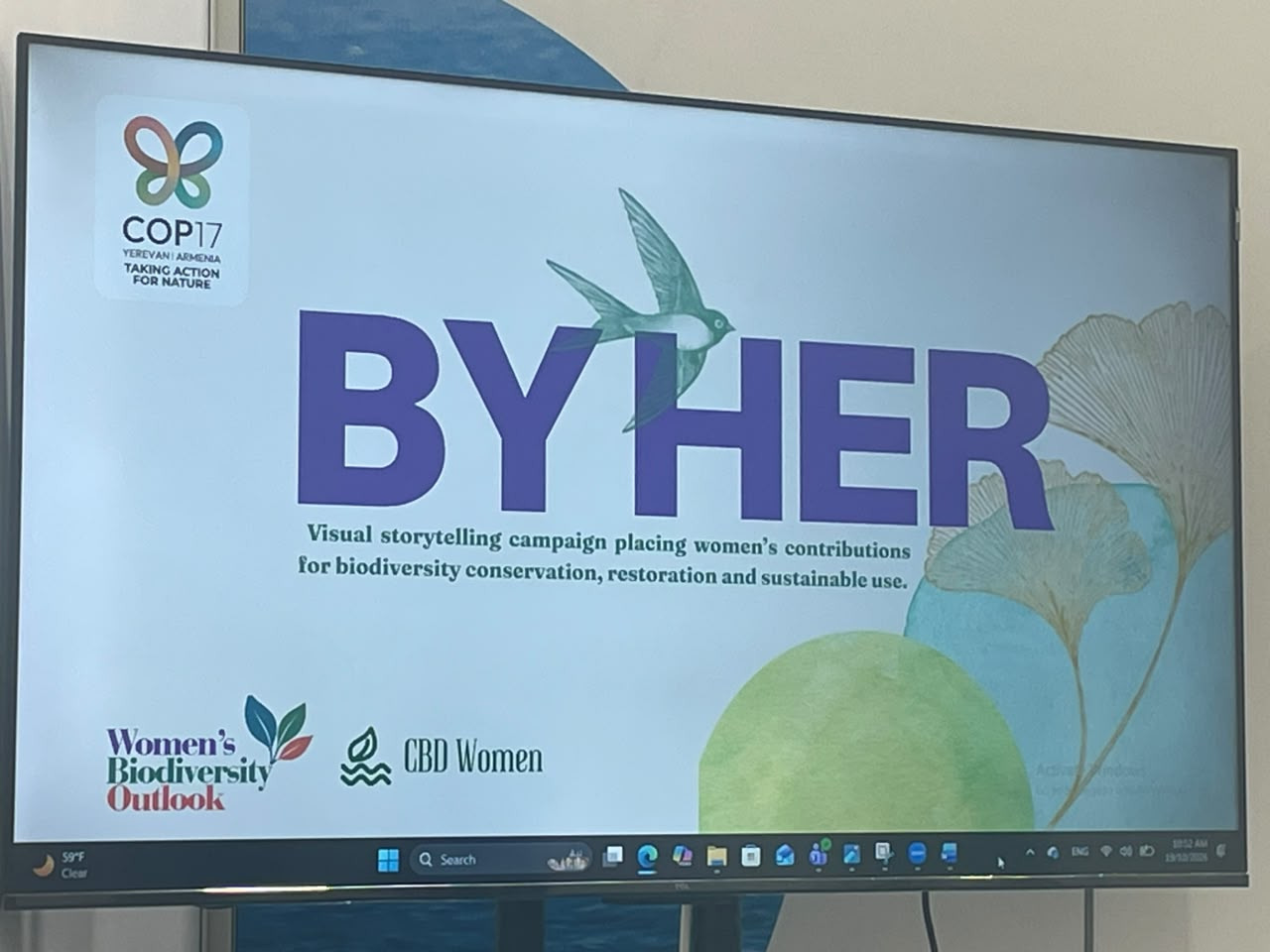
Presentation screen for BY HER campaign launch at UN Biodiversity Conference COP17
Yerevan, Armenia | 19 October 2026
At the 17th meeting of the Conference of the Parties to the Convention on Biological Diversity (COP17) in Yerevan, a presentation titled BY HER brought attention to a central question in biodiversity conservation: how can the contributions of women to protecting and restoring nature become more visible, recognised and supported?
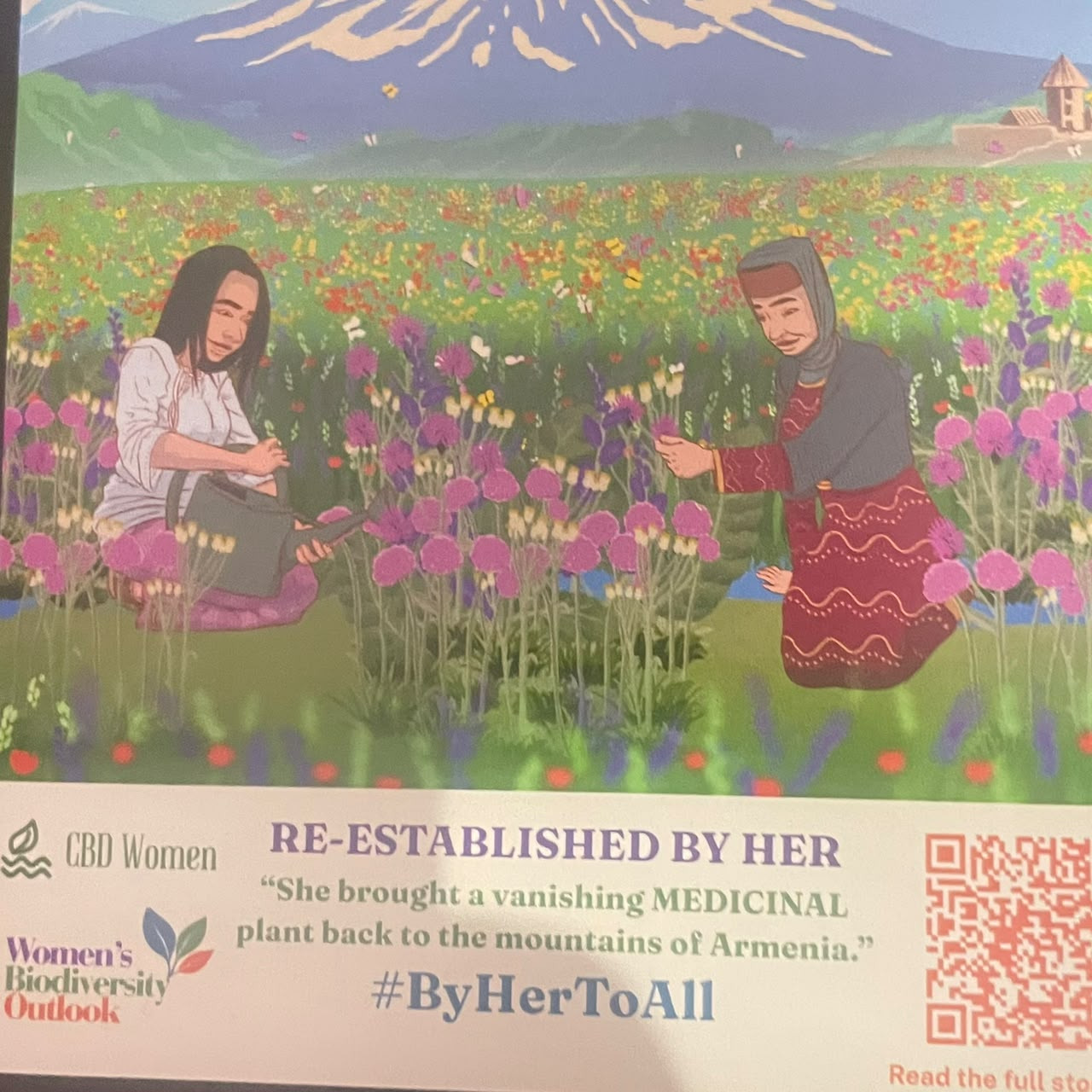
The presentation, documented in photographs taken at COP17 on Monday, 19 October, introduced BY HER as a visual storytelling campaign highlighting women’s contributions to biodiversity conservation, ecosystem restoration and the sustainable use of natural resources. The presentation slide carried the logos of CBD Women and the Women’s Biodiversity Outlook, linking the campaign to a broader effort to document women’s roles in shaping biodiversity outcomes.
The campaign’s message is straightforward:
women are not simply participants in environmental action. Across communities and ecosystems, they are conserving species, restoring habitats, sustaining food and seed systems, sharing traditional knowledge and helping shape how natural resources are managed.
Yet their work is not always adequately reflected in the policies, funding decisions and monitoring systems that determine how biodiversity progress is measured.
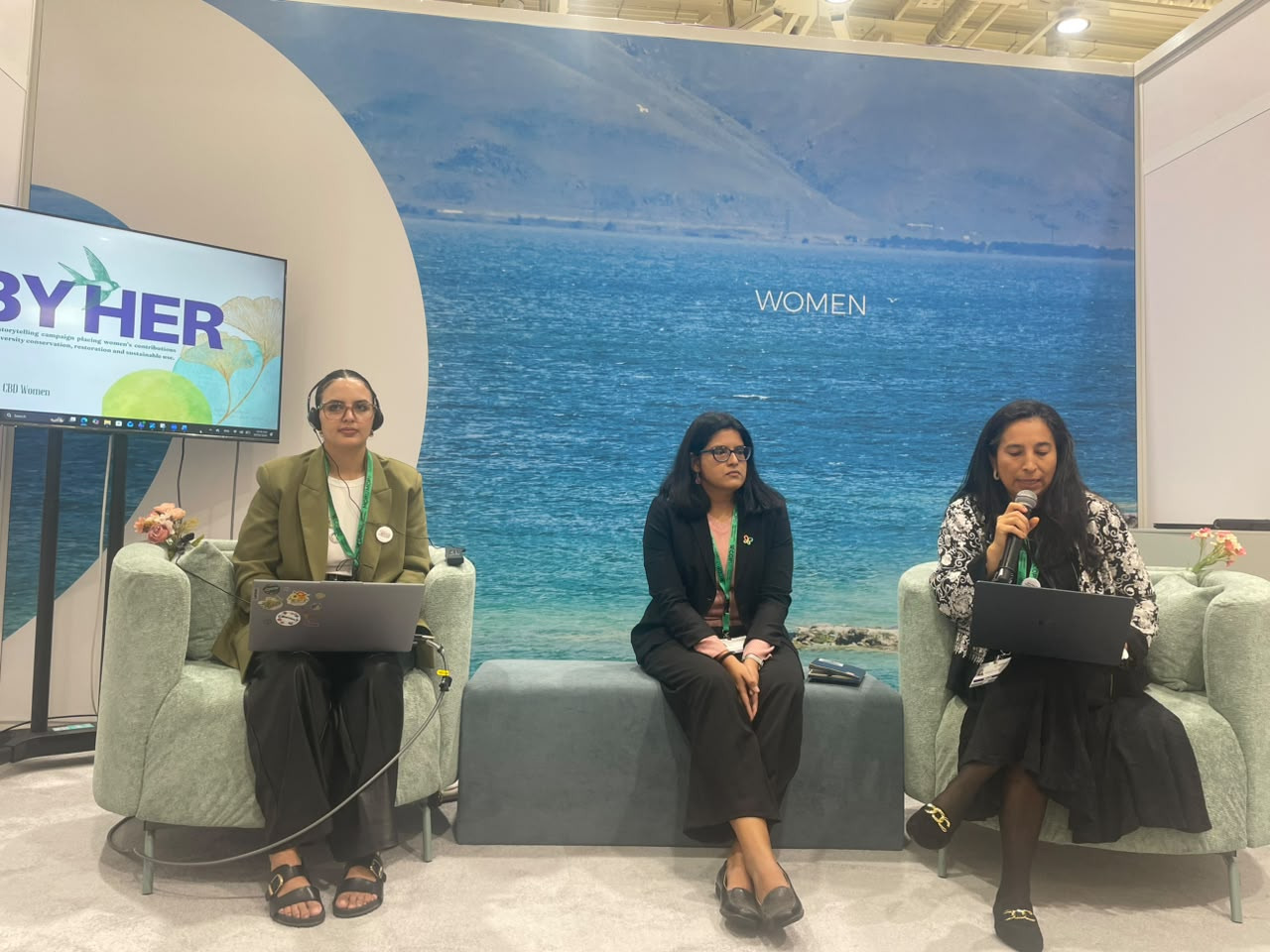
Panelist during the BY HER presentation. Photo by Raveloaritiana Mamisoa.
Bringing women’s stories into the biodiversity debate
The BY HER presentation took place against the backdrop of COP17, the global biodiversity conference held in Armenia from 19 to 30 October 2026. The meeting brings governments and other stakeholders together to assess progress towards the Kunming–Montreal Global Biodiversity Framework, the international agreement designed to halt and reverse biodiversity loss by 2030.
The campaign’s emphasis on visual storytelling offers a way to connect global biodiversity commitments with the people and communities working to protect nature on the ground.
Women’s experiences can reveal how conservation intersects with livelihoods, land rights, food security, cultural knowledge and community wellbeing. Their stories can also help explain the challenges faced by those whose environmental work receives limited institutional recognition or financial support.
The presentation’s connection to CBD Women and the Women’s Biodiversity Outlook places it within a wider discussion about gender-responsive biodiversity policy and the need to recognise women as knowledge holders, decision-makers and agents of environmental change.
The Women’s Biodiversity Outlook: Evidence of Women’s Leadership
The Women’s Biodiversity Outlook (WBO) is a flagship publication of the CBD Women’s Caucus, documenting women’s contributions to biodiversity and examining the conditions that enable or constrain their work. Envisaged as a recurring publication, it aims to strengthen the evidence base for gender-responsive biodiversity policies, implementation, monitoring and accountability, while advancing transformative change towards 2030 and beyond.
Its first edition draws on 71 case studies from different regions, ecosystems and scales, examining women’s contributions to implementing the Kunming–Montreal Global Biodiversity Framework and identifying what is needed to strengthen their efforts.
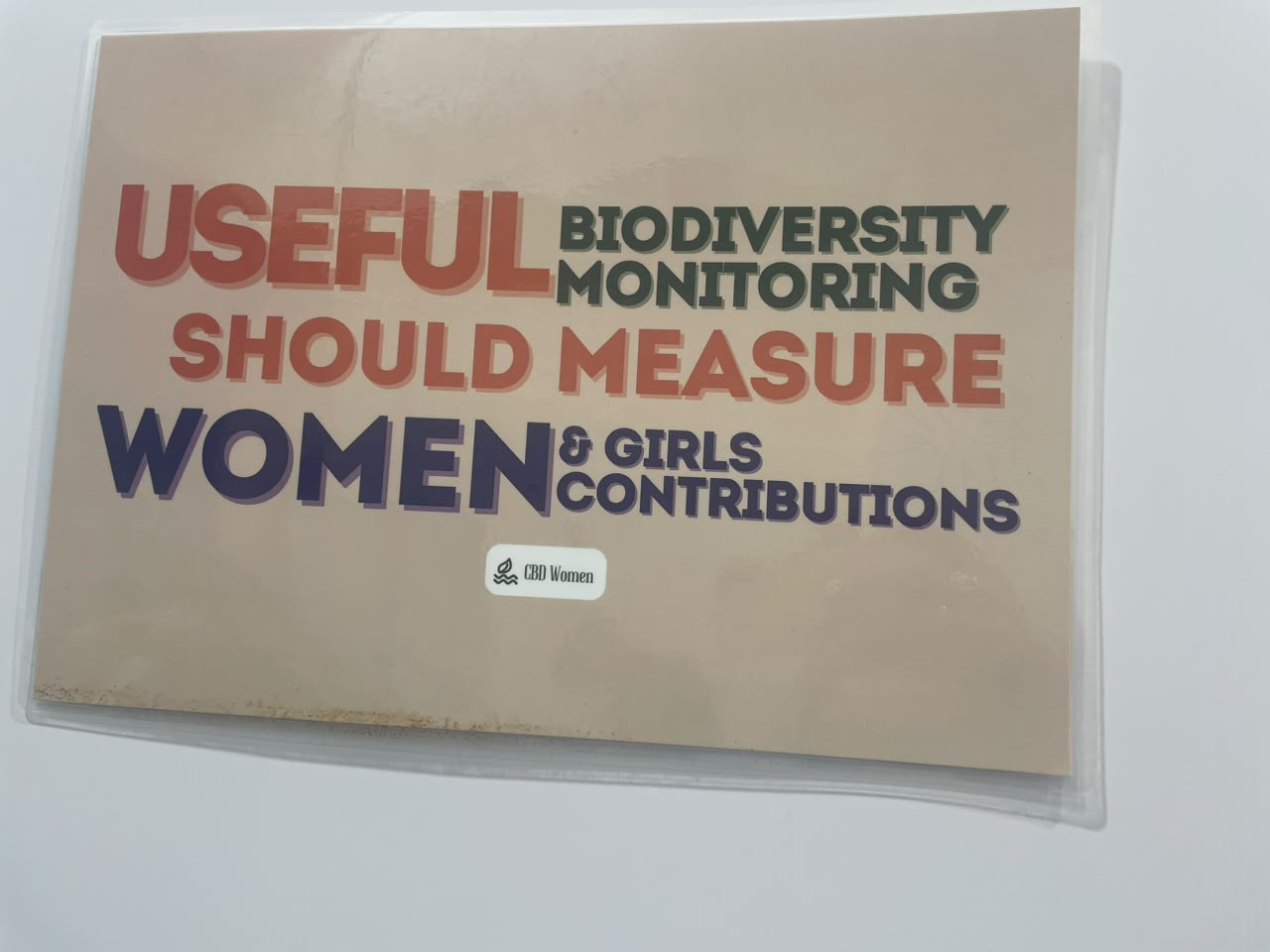
The Outlook highlights persistent barriers, including limited access to finance, insecure land and resource rights, exclusion from decision-making, discriminatory social norms and unpaid care responsibilities. It emphasises that recognising women’s contributions must go hand in hand with ensuring that women and their organisations have the rights, resources and institutional support needed to sustain their work and influence decisions affecting biodiversity.
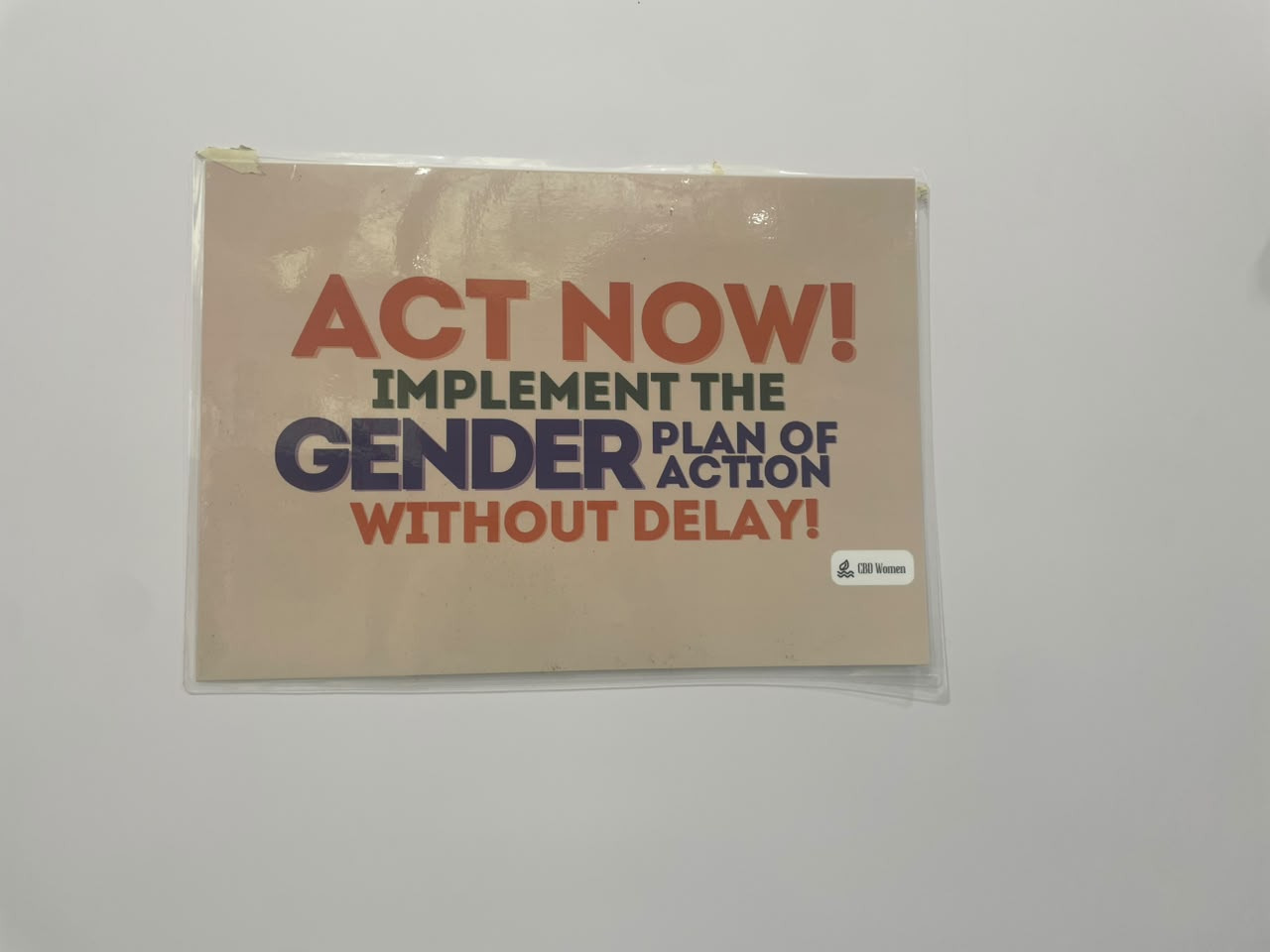
The CBD Women’s Caucus is the recognised women’s constituency within the Convention on Biological Diversity (CBD). It is a self-organised global platform through which women and girls, in all their diversity, advocate for their rights and advance gender-responsive biodiversity governance and action at all levels.
These priorities provide a wider context for understanding the significance of BY HER. By making women’s experiences and contributions more visible through storytelling, the campaign connects individual and community experiences with broader discussions about biodiversity conservation, ecological restoration and sustainable resource use. The challenge is to ensure that greater visibility translates into meaningful participation, recognition and support.
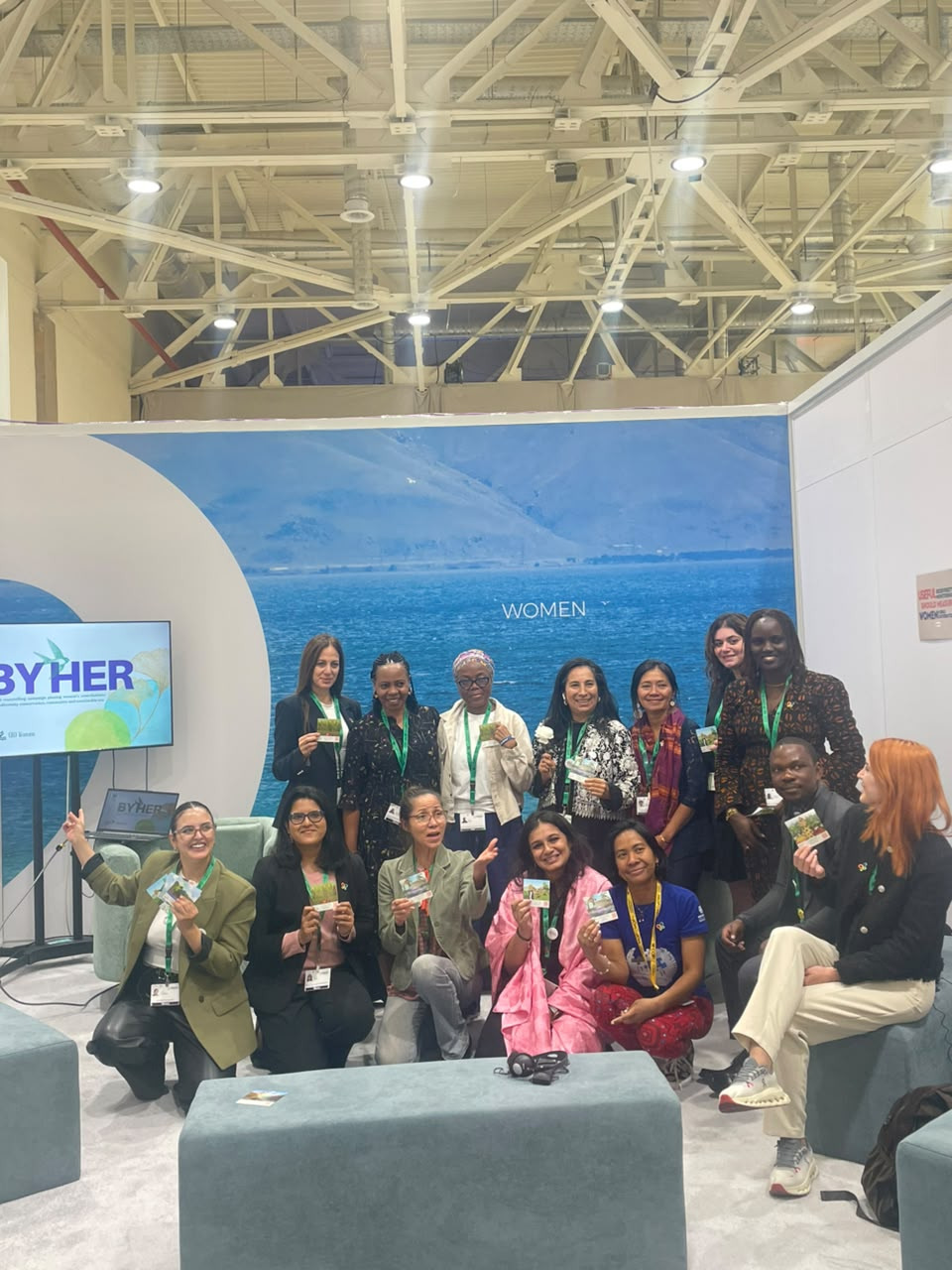
Participants and speakers at BY HER campaign session during UN Biodiversity Conference COP17.
From visibility to meaningful participation
The significance of initiatives such as BY HER lies not only in documenting individual achievements, but also in asking how that knowledge can influence environmental decision-making.
Women’s contributions can take many forms, from restoring degraded ecosystems and conserving local plant varieties to managing community resources and transmitting knowledge between generations. These activities can support biodiversity objectives while also strengthening local livelihoods and community resilience.
However, documenting such contributions is only one step. Their inclusion in biodiversity strategies, national implementation plans, funding mechanisms and monitoring frameworks is equally important.
As countries review progress towards global biodiversity targets at COP17, initiatives that bring community experiences into the discussion can help broaden the evidence available to policymakers and highlight whose knowledge is being recognised.
For the BY HER campaign, the challenge is therefore both representational and practical: to ensure that women's stories are heard and that the work behind those stories receives meaningful support.
Looking ahead
The first Women’s Biodiversity Outlook is scheduled for its official launch on 27 October 2026 at 11:00 during the COP17 Women’s Forum in Yerevan. The publication is intended to strengthen the evidence base for gender-responsive biodiversity policies, implementation, monitoring and accountability.
The BY HER presentation on 19 October appears to connect with this broader effort, although its precise relationship to the Outlook’s formal launch and the identities of the presenters require confirmation from the organisers.
Together, the campaign’s message and the Outlook’s evidence point towards a wider question for the global biodiversity community: how can commitments to protect nature be translated into systems that recognise, resource and include the women already contributing to that work?
At COP17, making those contributions visible is an important starting point. Ensuring that they are reflected in decisions, resources and long-term action is the work that must follow.
This story was produced as part of the 2026 CBD COP17 Fellowship, operated by Informed Earth in collaboration with Internews’ Earth Journalism Network


